
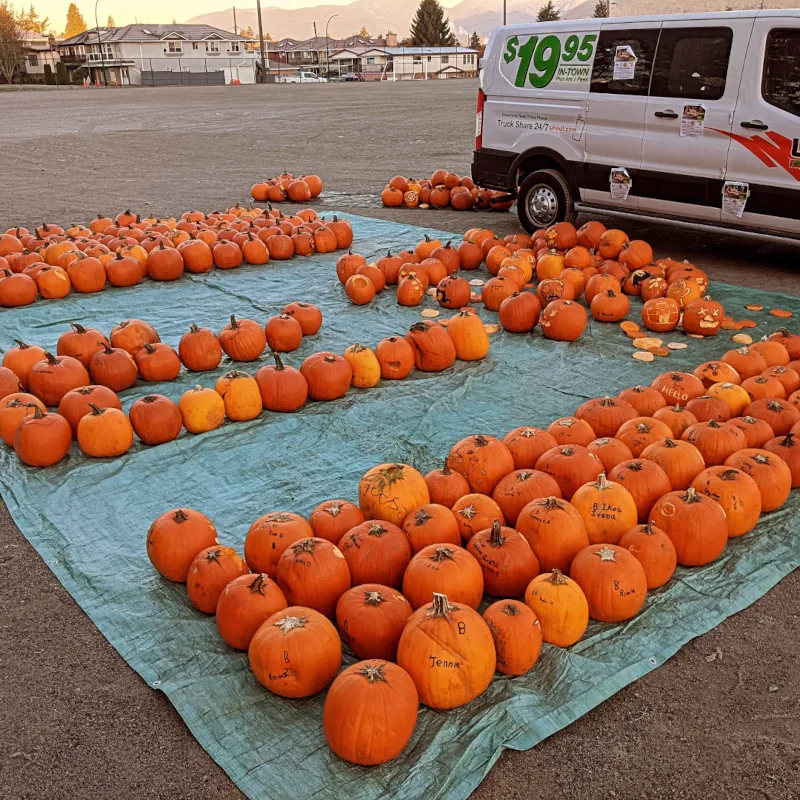
Walk into any store or farm in October and you’ll mostly see large, bright orange carving pumpkins. But not all are the same variety, and the differences for carving are worth knowing.
The two most common carving varieties you’ll come across are the Connecticut Field and the Howden. The Connecticut Field is one of the oldest grown pumpkins in North America. It dates back to Native American farming. The Howden was developed in the 1960s as an improved version. It became the standard Halloween pumpkin of today. It’s probably what you’re grabbing from the supermarket bin.
Most other large pumpkins you’ll find at farms, whatever they’re called, will carve just fine too. But there is a big difference between carving pumpkins and pie pumpkins. Pie pumpkins are much smaller and rounder, bred for sweet, dense fruit. They’re not easy to carve and are harder to gut.
As for skin: harder-skinned varieties like Howden have thick, rugged skin that holds up for several weeks. That means longer display life, but slightly more resistance when carving.
Smoother, softer-skinned varieties are a bit easier to carve and look brighter orange. In my experience they tend to bruise more easily and don’t last quite as long once carved. But they look prettier. Neither is a dealbreaker, just good to know what you’re working with.

Free download
Get The Ultimate Book on Pumpkin Carving — free
64 chapters covering every technique, every tool, and all nine carving styles. Written by someone who has carved pumpkin portraits for over 30 years and taught 500+ kids. Illustrated with real carvings by the author and his students.
Get the free book →Free to download. Works on iPhone, iPad, Android, and computer.